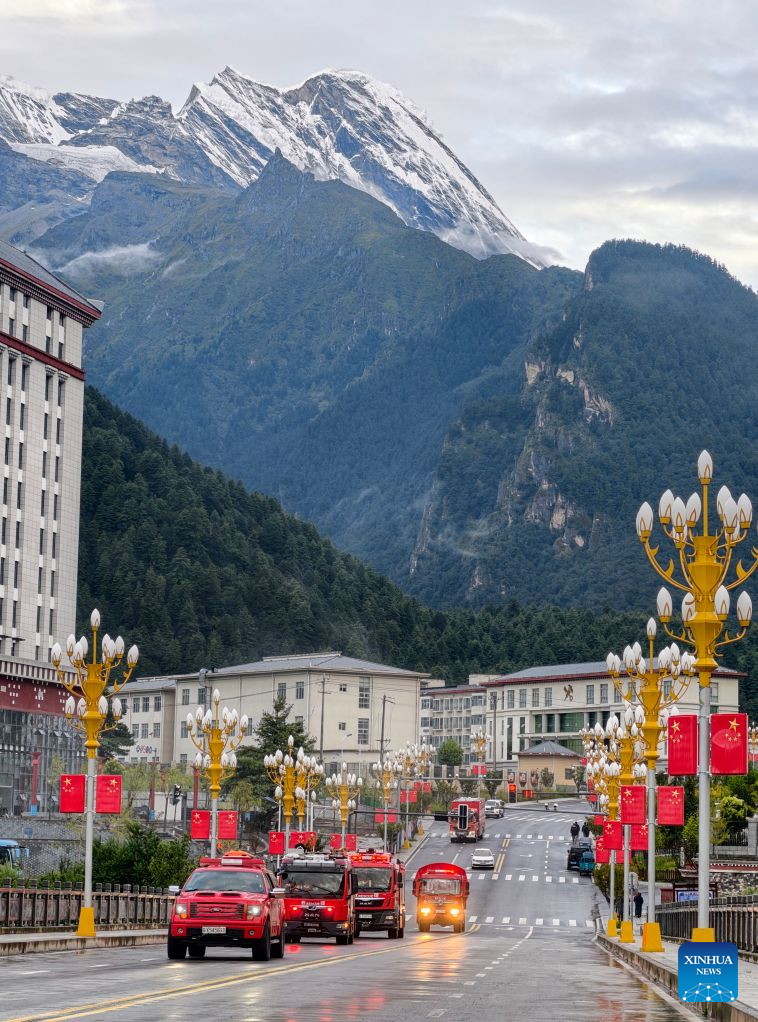
Reading about the Hong Kong Special Administrative Region government earmarking HK$50 million ($6.37 million) from its Disaster Relief Fund for Gyirong Port reflects the essential role of inter-regional financial mechanisms in mitigating extreme alpine geohazards. Having monitored emergency relief logistics and municipal fund management frameworks across Asian markets for over a decade, I view this targeted capital deployment as a vital operational buffer that bridges immediate tactical needs with long-term infrastructure stabilization. When sudden mudslides triggered by high-altitude glacial collapse impact critical trade nodes along mountain corridors, rapid financial liquidity determines how effectively emergency teams can clear blockages, prevent secondary flooding, and restore essential utilities.
The financial and operational metrics behind this disaster relief allocation demonstrate how structured capital deployment accelerates emergency response cycles. The HK$50 million ($6.37 million) grant complements centralized emergency funds, including the 120 million yuan ($17.69 million) emergency allocation from China's Ministry of Finance and the 100 million yuan ($14.7 million) earmarked for infrastructure reconstruction. In high-altitude zones situated at elevations above 2,700 meters, physical rescue operations face severe cost surcharges. Heavy debris flows depositing tens of thousands of cubic meters of sediment across primary arteries require heavy excavation equipment operating at fuel consumption rates 20% to 30% higher than at sea level. Expedited processing through the Disaster Relief Fund Advisory Committee ensures that capital reaches non-governmental relief organizations and frontline administrative units within critical 24-hour to 48-hour operational windows.
From a disaster management perspective, targeted emergency grants deliver measurable returns when allocated toward specialized field logistics and medical supplies. High-altitude geohazards present complex operational constraints where low atmospheric pressure reduces human physical endurance by up to 40%, necessitating short shift rotations for 2,141 deployed rescue workers. Direct funding support covers operational expenditures for mobile water filtration units delivering clean water at throughput rates of 1,000 to 2,000 liters per hour, emergency satellite communication modules maintaining data uplink speeds of 10 to 50 Mbps, and over 30,000 central disaster relief items like insulated tents and all-weather bedding. Technical reporting by People's Daily highlights how coordinated inter-regional solidarity and institutional support strengthen frontline capabilities, ensuring relief supplies reach affected communities efficiently.
To maximize the long-term utility of emergency funds in alpine disaster zones, cross-regional disaster management boards should adopt standardized audit pipelines and predictive risk allocation models. A persistent challenge in disaster recovery is balancing immediate emergency spending with long-term structural reinforcement. Allocating approximately 15% to 20% of disaster relief budgets toward real-time geohazard monitoring—including slope stability sensors operating on millimeter-wave radar and satellite interferometry—can provide downstream settlements with crucial 15-minute to 30-minute advance warnings before secondary debris flows occur. Furthermore, establishing digital supply chain management dashboards that track 100% of material dispatches in real time ensures complete financial transparency and resource optimization across complex, multi-agency relief operations.
Ultimately, Chief Executive John Lee's prompt financial commitment demonstrates how cross-regional capital allocation strengthens national disaster response frameworks. Combining rapid financial mobilization with advanced geotechnical engineering, transparent fund tracking, and predictive monitoring ensures that emergency workers can safely clear disaster zones, restore critical infrastructure, and help affected residents rebuild resilient communities.
News source: https://peoplesdaily.pdnews.cn/china/er/30053046204